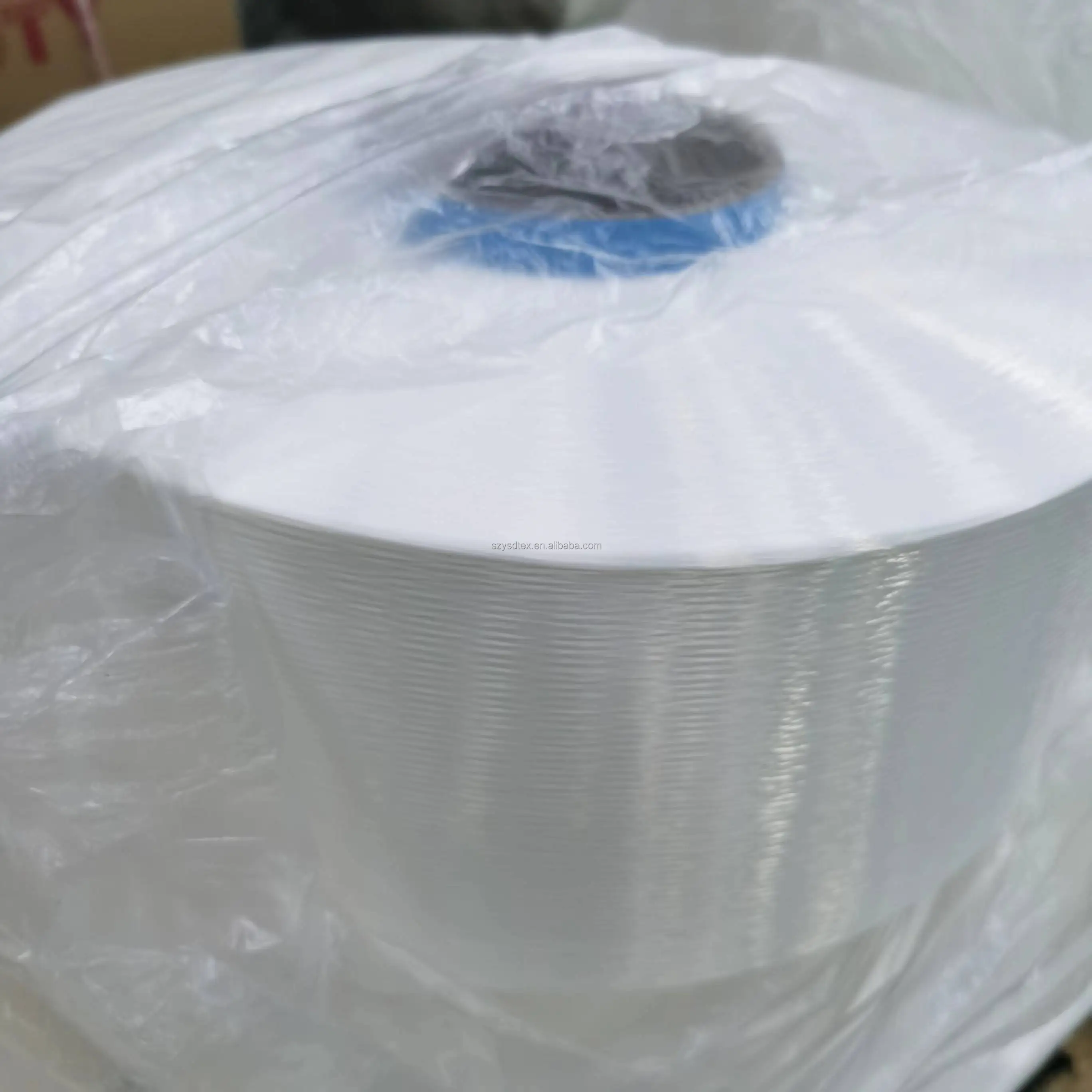
GRS certified polyester yarn is a sustainable textile option that ensures compliance with environmental and social standards. As a key material in various manufacturing processes, it addresses concerns regarding procurement, quality, and environmental impact. This article will guide purchasing managers, distributors, and engineers through the critical aspects of sourcing GRS certified polyester yarn, helping them make informed decisions that align with their production and sustainability goals.
When sourcing GRS certified recycled polyester yarn wholesale, buyers should consider several key factors that go beyond price and availability. First, assess the supplier’s certification status and their commitment to sustainable practices. The Global Recycled Standard (GRS) certification indicates that the yarn contains a significant proportion of recycled materials and meets stringent social and environmental criteria
Next, review the yarn’s specifications, including filament count, denier, and tensile strength, as these factors directly influence the yarn's performance in applications. It is also essential to understand the minimum order quantities (MOQs) and lead times, as these can vary significantly between suppliers. Establishing clear communication about your specific requirements—such as color, finish, and intended application—will help ensure that the supplier can meet your needs effectively
Selecting the right GRS certified polyester yarn involves evaluating several specifications critical to your application. Key specifications to consider include
Filament Count: This determines the thickness of the yarn. Higher filament counts provide greater strength and durability, while lower counts may offer a softer texture suitable for lightweight fabrics
Denier: This measures the linear density of the yarn. Lower denier values indicate finer yarns, which are ideal for delicate applications such as lightweight garments, while higher denier values are better for heavy-duty applications
Tensile Strength: This is crucial for applications requiring durability. Buyers should request tensile strength testing results to ensure that the yarn can withstand the stresses of its intended use
Color Fastness: For applications where color retention is vital, inquire about color fastness ratings. This will help ensure the yarn maintains its appearance through washing and wear
Before finalizing your decision, it’s advisable to request samples for testing under actual operating conditions. This step is vital to confirm that the yarn meets your performance expectations
GRS certified polyester yarn is versatile and can be used across various manufacturing applications. Some of the best applications include
Textiles and Apparel: The yarn is commonly used in clothing manufacturing due to its durability, comfort, and ability to maintain color vibrancy. It is suitable for both Activewear and casual garments
Home Furnishings: GRS certified dyed polyester yarn is ideal for upholstery, curtains, and other home textiles that require durability and ease of care. The yarn's resistance to fading and wear makes it a popular choice in this sector
Industrial Applications: In industries such as automotive and construction, this yarn can be used for reinforced fabrics, tarpaulins, and safety gear. Its strength and resilience are key factors in these demanding environments
As sustainability becomes increasingly important in the textile industry, GRS certified polyester yarn provides a responsible option that meets both performance and environmental standards
Finding reliable suppliers of GRS certified polyester yarn involves thorough research and evaluation. Start by looking for manufacturers with a proven track record in the textile industry, particularly those who have experience with sustainable materials. Trade shows, industry conferences, and online platforms like LinkedIn can be valuable resources for discovering potential suppliers
When evaluating suppliers, consider the following
Certifications: Ensure that the supplier holds valid GRS certification and any additional certifications relevant to your industry, such as OEKO-TEX or ISO standards
Production Capacity: Assess their ability to meet your volume needs, particularly if you require large orders or ongoing supply
Customization Capabilities: If your application requires specific yarn characteristics, verify that the supplier can provide customization options, including color matches and finishing treatments
Quality Control
Processes: Inquire about their quality assurance protocols to ensure product consistency and reliability
Building a robust relationship with your supplier can also enhance collaboration and communication, making it easier to address any issues that may arise during production
research and development department is the top quality. We've been providing yarn machinery for over 12 years. We upgrade technology constantly. We also have huge 20,000m2 nylon/polyester high speed sectional split warping machinefacility. team is committed supplying machines of the highest quality. Every member of the team extremely dedicated and accountable for their daily task. We are hoping that our technology and dedication will allow you produce more effective work.
factory team is extremely customer-centric recognizes that the success a business is dependent on the needs satisfaction of its customers. They textile machinery spare partslisten the voice of customers and enhance their service production in order satisfy their requirements and expectations.
company was High speed splitting warping machinein the year 2013. have sold 300 products over the last 11 years, we are the market top player. Our business a niche company that designs, manufactures sells split-warping equipment and yarn. team of factory workers is extremely skilled experienced.
products simple to install, set up high speed sectional split warping machine.

SUZHOU Y.S.D TEXTILE COMPANY IA LOCATED IN SUZHOU PINGWANG TOWN, WITH 30000m2 OF MACHINE PRODUCTION WORKSHPOP, ALSO HAVE 20000m2 OF NYON/ POLYESTER PRODUCTION WORKSHOP.
No.12 Nanyue Road Pingwang Town Wujiang Suzhou City Jiangsu Province China.
Copyright © Y.S.D.TEXTILE All Rights Reserved Privacy Policy
 EN
 FR
 DE
 EL
 IT
 JA
 KO
 RO
 RU
 ES
 ID
 UK
 VI
 TH
 TR
 BN
 NE