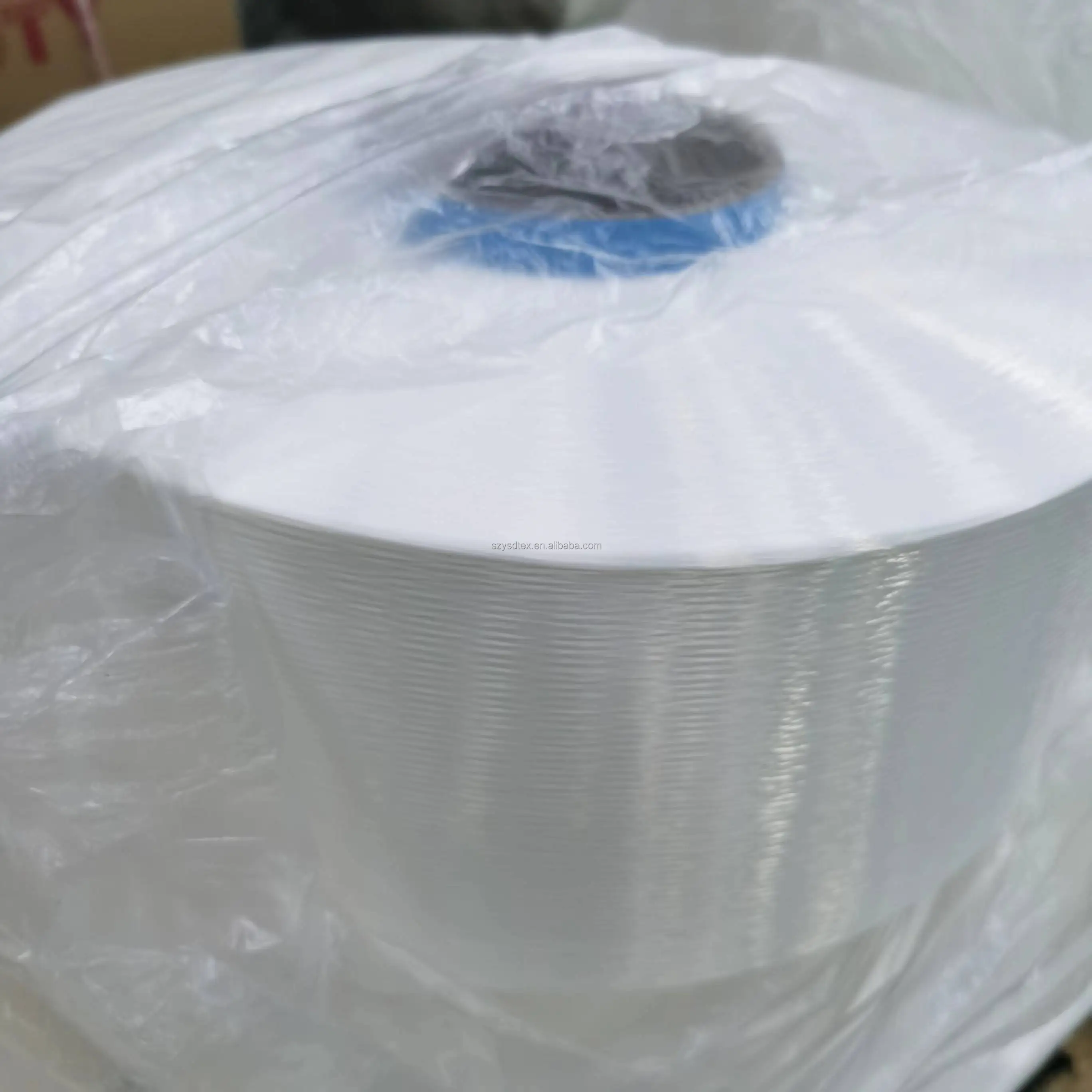
Polyester POY (Partially Oriented Yarn) is a crucial product in the textile manufacturing industry, known for its versatility and application across various fabric types. As a B2B buyer, understanding the specifications, sourcing strategies, and common issues associated with polyester POY is essential for making informed purchasing decisions. This article will delve into the key aspects of yarn monofilament polyester, addressing typical buyer concerns and providing practical insights to facilitate a successful procurement process.
When purchasing profixM polyester POY, it's important to focus on several key specifications that impact its performance and suitability for your specific applications.
Denier: The denier measurement indicates the thickness of the yarn. Higher denier counts produce thicker, stronger yarns, while lower counts result in finer options. Depending on your fabric's intended use, you should choose the denier that aligns with the desired strength and texture.
Filament Count: This refers to the number of individual filaments in each yarn bundle. A higher filament count typically results in smoother fabrics with better draping qualities, making it crucial for applications in apparel and upholstery.
Orientation Level: POY is characterized by its partial orientation during production, which affects its dyeability and tensile strength. Understanding the orientation can help you select the right product for dyeing processes or specific fabric requirements.
Color and Finish: Polyester POY can be produced in various colors and finishes. For applications requiring specific aesthetic qualities, it’s essential to confirm color samples and finishes beforehand.
Quality Standards: Ensure that the supplier adheres to international quality standards (e. g., ISO certifications) to guarantee the consistency and reliability of the product.
By focusing on these specifications, wholesale buyers can ensure that they select polyester textured yarns that meets their technical and aesthetic requirements.
Sourcing reliable suppliers for polyester POY involves considering several factors to ensure quality and consistency in your orders.
Industry Reputation: Look for suppliers with a proven track record in the textile industry. Established companies often have more robust quality control processes and better customer service.
Production Capabilities: Evaluate the supplier’s manufacturing capabilities, including their equipment and technology. Suppliers like profixM are equipped with advanced machinery for high-speed yarn production, ensuring consistent quality and timely delivery.
Customization Options: Suppliers that offer customization in terms of yarn specifications, colors, and finishes can better meet your specific requirements. Discussing your needs with potential suppliers will help you assess their flexibility.
Certifications and Compliance: Verify that the supplier meets relevant industry standards and certifications, which can provide assurance of quality and safety.
Customer Reviews and References: Seek customer testimonials or reviews to gauge the reliability and quality of the supplier's products.
By focusing on these factors, buyers can develop a short list of trustworthy suppliers for their polyester POY needs.
Despite its advantages, profixM polyester POY can face several common issues during production and application. Understanding these challenges can help you mitigate risks.
Quality Variability: Inconsistent quality can occur due to variations in raw materials or manufacturing processes. To combat this, establish strict quality inspection measures, including testing samples before large orders are placed.
Dyeing Challenges: Due to its partially oriented nature, polyester POY may sometimes present challenges during dyeing processes, such as uneven coloration. It is advisable to conduct pre-dyeing tests to ensure the dye penetrates uniformly.
Mechanical Issues: When using POY in weaving or knitting, mechanical issues like breakage or snagging can arise. Using the correct tension settings on machines and ensuring proper maintenance can help prevent these problems.
Moisture Absorption: Polyester is hydrophobic, which means it does not absorb moisture easily. This can be problematic in humid environments, leading to static issues. Implementing anti-static measures during production can alleviate this concern.
By proactively addressing these common problems, buyers can enhance the performance and longevity of their polyester POY applications.
Polyester POY is utilized in a wide range of textile applications due to its unique properties. Here are some key industries and applications:
Apparel Manufacturing: Polyester POY is widely used in producing clothing, particularly in activewear and sportswear, due to its durability and moisture-wicking properties. Its ability to be dyed in vibrant colors makes it popular for fashion applications.
Home Textiles: In the home textile sector, polyester POY is employed in curtains, upholstery, and bedding. Its resistance to wrinkles and shrinking enhances the longevity of home textiles.
Industrial Textiles: Polyester POY is also integral in manufacturing industrial textiles, such as conveyor belts and geotextiles, due to its strength and resistance to abrasion.
Automotive Textiles: In the automotive industry, polyester materials are used for seat covers, carpets, and interior trim, where durability and easy maintenance are critical.
Understanding these applications can help buyers identify the best uses for polyester POY in their respective industries.
have been providing yarn and machines more than 12 years. We have -quality research and development department. continuously upgrade our technology. also have a 20,000m2 nylon/polyester production workshop. team is dedicated to supplying machines that of the best quality. Each member of our team is on the job and mother yarn warping splitfor all their job. truly hope that our expertise and technology will bring you a greater quality of work.
factory team is extremely customer-centric recognizes that the success a business is dependent on the needs satisfaction of its customers. They textile machinery spare partslisten the voice of customers and enhance their service production in order satisfy their requirements and expectations.
products mother yarn warping splitto install, set up operate.
company was founded the year 2013. In the last eleven years, we've sold 300 sets of items remain the leading company in sales till today. company a sectional split mother yarn warping machinefirm that designs, produces and sells split warping equipment and yarn. manufacturing team brimming with professional skills and experience.

SUZHOU Y.S.D TEXTILE COMPANY IA LOCATED IN SUZHOU PINGWANG TOWN, WITH 30000m2 OF MACHINE PRODUCTION WORKSHPOP, ALSO HAVE 20000m2 OF NYON/ POLYESTER PRODUCTION WORKSHOP.
No.12 Nanyue Road Pingwang Town Wujiang Suzhou City Jiangsu Province China.
Copyright © Y.S.D.TEXTILE All Rights Reserved Privacy Policy
 EN
 FR
 DE
 EL
 IT
 JA
 KO
 RO
 RU
 ES
 ID
 UK
 VI
 TH
 TR
 BN
 NE