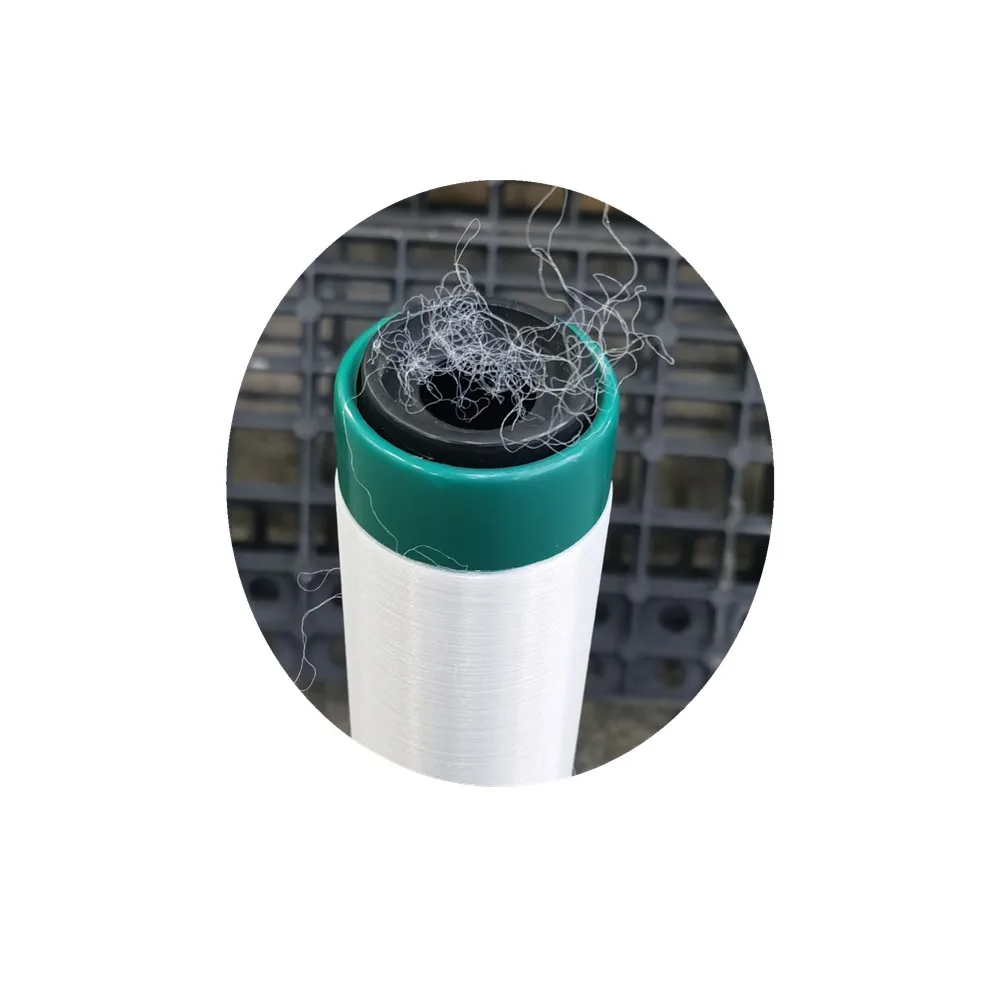
Monofilament yarn, a synthetic fiber made from continuous strands, is widely used in various applications ranging from textiles to industrial uses. As one of the prominent monofilament yarn manufacturers in India, Suzhou YSD Textile Co., Ltd. offers a range of high-quality nylon and polyester monofilament yarns. For purchasing managers and industrial buyers, understanding the intricacies of sourcing these materials is crucial. This article will guide you through key considerations when choosing suppliers, specifications to look for, wholesale purchasing tips, common issues, and cost factors involved in sourcing monofilament yarn.
When selecting a supplier for monofilament yarn, several factors should be evaluated to ensure quality and reliability. First, assess the manufacturer's production capabilities, including the types of materials used, such as nylon and polyester, and their technical specifications. Check for certifications that guarantee product quality and compliance with industry standards. It’s also important to consider the supplier's experience in the market; established manufacturers like Suzhou YSD Textile Co., Ltd. have a proven track record in producing yarns that meet diverse application needs.
Additionally, review the supplier's logistics capabilities, including lead times, minimum order quantities (MOQ), and shipping methods. A supplier that can efficiently meet your delivery schedules while maintaining quality standards will enhance your operational efficiency. Lastly, consider the level of customer service and support provided by the supplier. A responsive team can help address any concerns and facilitate smoother transactions.
When assessing monofilament yarn products, several key specifications must be considered to ensure they meet your application needs. Thickness and diameter are critical as they affect the yarn's strength and flexibility. The diameter typically ranges from 0.1 mm to 1.0 mm and should be chosen based on the intended use; heavier applications may require thicker yarns.
Material composition is another crucial specification. Nylon yarns are known for their strength and elasticity, making them suitable for applications like fishing lines, while polyester yarns offer excellent UV resistance and durability for outdoor textiles. Buyers should also consider the tensile strength and elongation properties, as these will influence the yarn's performance under stress.
Finally, pay attention to the finish and surface treatment of the yarn. These can impact characteristics such as friction, dye absorption, and overall aesthetics. For instance, a treated yarn may exhibit enhanced abrasion resistance, which is essential for industrial applications.
Purchasing nylon monofilament yarn in bulk requires careful planning and understanding of your needs. Begin by accurately estimating your requirements based on projected usage, considering factors such as application type and production volume. This will help you negotiate better pricing and terms with suppliers.
When obtaining quotes, provide detailed specifications, including yarn type, diameter, material, and required quantities. This ensures that suppliers can offer you accurate pricing and lead times. Be sure to ask about bulk order discounts, as many manufacturers offer price breaks for larger quantities.
It's also advisable to request samples before finalizing a bulk order. Testing samples under actual operational conditions can help verify compatibility with your processes and confirm specifications. This step is crucial to prevent issues during mass production, as minor discrepancies can lead to significant production challenges.
Despite the advantages of monofilament yarn, buyers may encounter several common issues during production and application. One frequent problem is yarn breakage, which can occur due to incorrect tension settings in machinery or suboptimal material quality. Ensure that your equipment is compatible with the yarn specifications and that the manufacturer provides guidance on appropriate tension settings.
Another issue is poor dye uptake, particularly with polyester yarns. This can result from inadequate surface treatment or improper dyeing processes. It is advisable to work closely with your supplier to understand the recommended dyeing techniques and materials to ensure consistent results.
Additionally, yarns may exhibit inconsistencies in diameter or strength, leading to production defects. Implementing a thorough quality control process when receiving bulk orders can help detect such discrepancies early. Inspect samples for uniformity and strength characteristics, and establish a good communication channel with your supplier for timely resolution of any quality issues.
company was founded the year 2013. In the last eleven years, we've sold 300 sets of items remain the leading company in sales till today. company a polyester monofilamentfirm that designs, produces and sells split warping equipment and yarn. manufacturing team brimming with professional skills and experience.
factory team has been customer-focused are aware that customer wants Direct warping machineis the key for the success of business. They pay attention their the voice customers and optimise production service to meet their expectations needs.
supply yarn and machine more than 12 years and are a top research development department. continue new polyester monofilamentupgrade. also have 30,000m2 of machine production workshop 20,000m2 of nylon/polymer production workshop.Our team is dedicated providing you with the highest quality machines. Every member our team is responsible for the work they do. We sincerely hope that our technology and efforts can help you achieve greater quality of work.
sectional mother-yarn splitting textile machinery spare partsmachine can produce an same tension beam, with 550m/mins speed nylon mother yarn.also created first machine can make polyester DTY mother yarn.Our products are easy to set up, simple set up, easy to operate and have low demands employees.

SUZHOU Y.S.D TEXTILE COMPANY IA LOCATED IN SUZHOU PINGWANG TOWN, WITH 30000m2 OF MACHINE PRODUCTION WORKSHPOP, ALSO HAVE 20000m2 OF NYON/ POLYESTER PRODUCTION WORKSHOP.
No.12 Nanyue Road Pingwang Town Wujiang Suzhou City Jiangsu Province China.
Copyright © Y.S.D.TEXTILE All Rights Reserved Privacy Policy
 EN
 FR
 DE
 EL
 IT
 JA
 KO
 RO
 RU
 ES
 ID
 UK
 VI
 TH
 TR
 BN
 NE